What is Technical Relevance (TR)?
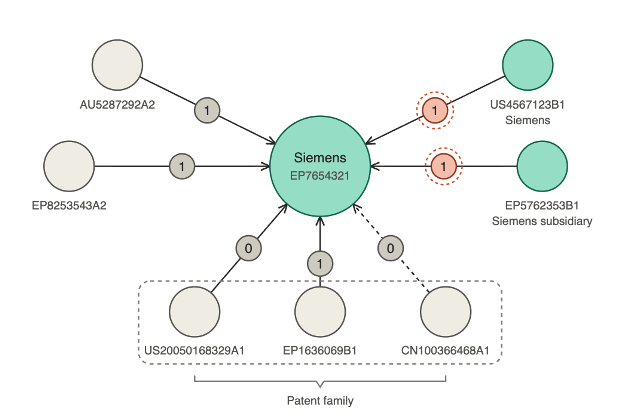
Technical Relevance (TR) is an indicator that reflects the technological importance of a patent. It is calculated based on the number of prior art citations (forward citations) a patent publication receives from subsequent publications. Each distinct citing publication contributes one forward citation, and all forward citations are counted, including self-citations of the patent owner and citations from its subsidiaries. Counts are then normalized for publication age, patent office citation practices, and technology field citation practices (main IPC/CPC), and folded into a value range of 0 to 20.
How is Technical Relevance interpreted?
| /High/ | /Low/ |
|
A high TR value reflects a high technical relevance of a patent, since subsequent patents have to cite the patent as prior art. Patent citations are reviewed and verified by objective and qualified patent examiners. A high TR value thus identifies leading technologies of a particular market segment. |
A low TR value reflects a low technical relevance of a patent, since subsequent patents are not citing the patent as prior art. A low TR value reflects that a patent either protects a niche technology or a technology that is not of relevance to other market participants. |
High Technical Relevance (TR)
A high TR value indicates that a patent is frequently cited by subsequent patents.
- Reflects high technological importance
- Indicates that the patent has influenced further technological developments
- Can help identify key technologies within a specific market or field
Low Technical Relevance (TR)
A low TR value indicates that a patent is cited less frequently by subsequent patents.
- Reflects lower technological importance
- May indicate that the patent relates to a more specialized or less influential technology area
How is Technical Relevance used in the platform?
Technical Relevance is one of the IPlytics patent valuation indicators and is calculated for distinct patent publications. Where results are aggregated to the INPADOC patent family, the highest TR value among the family members is assigned to the family. It contributes to the overall characterization of technological impact within a portfolio in analytical views such as the Indicators tile.